15/03/2017

Behave accordingly!

Designers have power to change. To change our minds, opinions and judgement. Do they also have the power to change people's behaviour? 

Within the past semester a group of my 1st year HND students at Prague college worked on assignment called Behaviour. Their task was to choose a public space or environment where people gather and possibly also interact with each other. By their design or interventions in the selected place the students were supposed to change the people's behaviour (in a positive way). In real life such task would require more time and lots of testing especially when trying to break the ingrained habits or routine. This project was rather supposed to make the students aware of the design power and to encourage them to step away from traditional graphic design and observe the environment we live in. The brief was completely open and the students didn't fail to demonstrate their creative thinking. I was happy to see the diversity of approaches and various results - from fun encouraging idea to practical solutions to conceptual answer.

Martina Drobna found her late evening commuting quite annoying especially when waiting on the station for a long time. She observed that also other co-waiting people look rather bored. So she came up with an entertaining idea. Turn the flashlight on your phone and become an artist, or simply answer the question the drawing board offers. At the end, share your temporary creation on social media. Fun, isn't it?
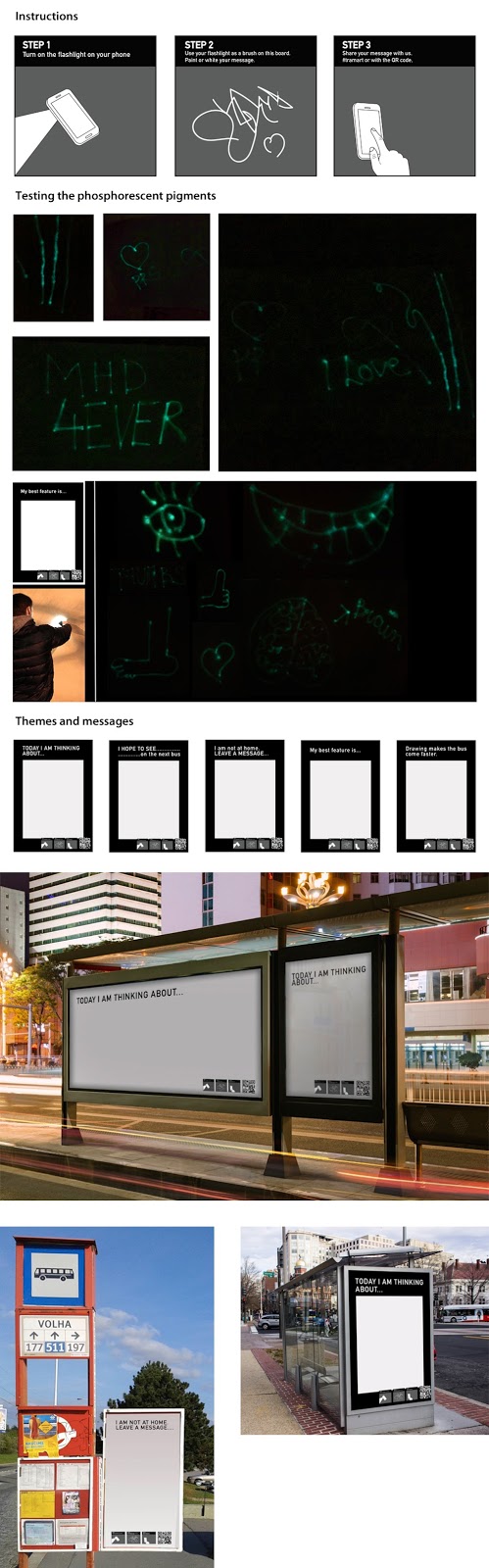
Behaviour by Martina Drobna

Behaviour by Martina Drobna


Simon Rico uses one of the Prague's busiest metro stations on daily basis. Several entrances and exits in various directions cause lots of collision. In the narrow corridor it brings the travellers rather unpleasant experience. Simon came up with an idea to leave some paths only for exits and some only for entrances. The final solution would require the commuters to be disciplined but could indeed save time and avoid jamming with others.
Behaviour by Simon Rico

Behaviour by Simon Rico


Jakub Vosecky decided to combine tidiness with fun and a bit of education. He picked Prague's district Letna which was known because of the massive Stalin's Monument (between years 1955 - 1962) - the world's largest representation statue of Joseph Stalin. Nowadays the remaining statue's pedestal is a popular place for skateboarders which directed Jakub's idea as well as his outcome's visual style. The aim to keep the area clean and to remind the history allowed for Stalbin to be created.
Behaviour by Jakub Vosecky

Behaviour by Jakub Vosecky


Jules Muijsers wanted to deliver a deeper message regarding life and time. He observed that people barely notice the surroundings while rushing through the streets. So he decided to stop them and make them think about themselves in terms of how they spend their time and life. His installation shows four different types of persons based on various approaches to time. The used material - thread - demonstrates connection to life. You can see life as a thread - sometimes hanging on one thin line only.
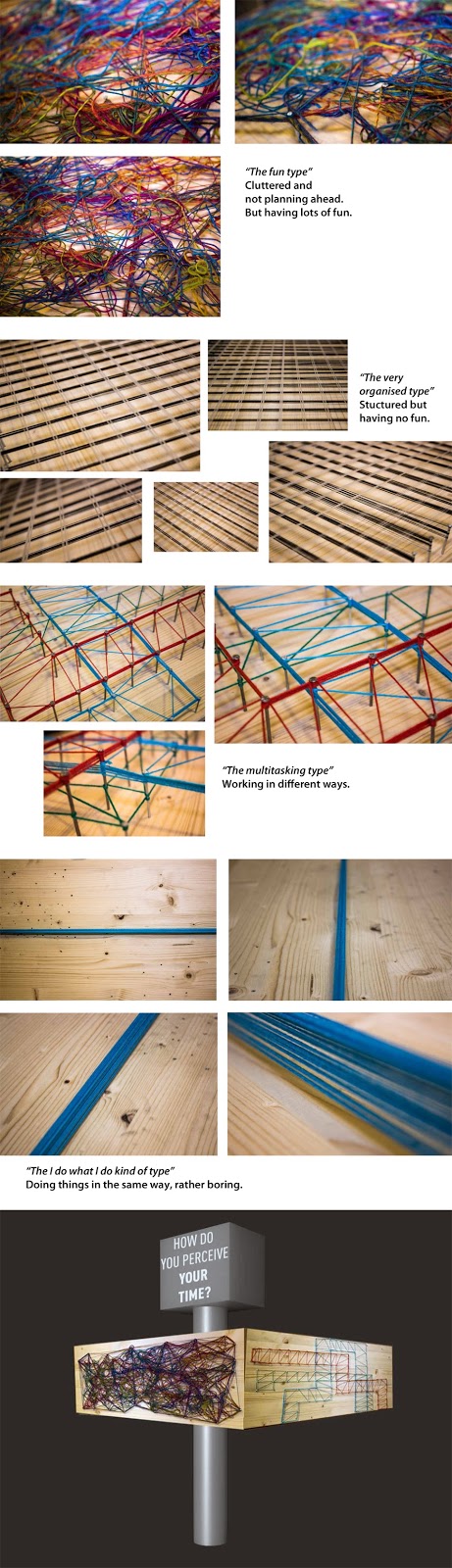
Behaviour by Jules Muijsers

Behaviour by Jules Muijsers


In conclusion

This behaviour changing task can be approached from any perspective. I'd be interested to see the above selected suggestions in real life and how they would stand the testing. All of them have potential to work with changing the habits, some with immediate visible effect and measurable results. At the end here is an interesting experiment on how unexpectedly easy it can sometimes be.

13/03/2017

All about love

What is it I love about teaching? Apart from being constantly filled with creative energy, inspiration and motivation, it is mostly the diversity. Diversity of other designers thinking, their approaches, and outcomes. 

Last semester I gave to my students at Prague college a task to create corporate identity for a fashion brand. With previous experience of creating small visual identity only, for most of them this was their first broader project of such kind. As a designer I believe that corporate identities shouldn't be only functionally and aesthetically correct but should also carry deeper thought and be built on an interesting idea. My students' works shown below reflect this attitude. In some of them I love certain details, in some the complex approach, in others it is the way they look like - extraordinary, fighting nowadays trend of boring logotypes that all tend to look the same.

From the brief

The brand, called Love is the way up (or Litwu as they like to use) is a start-up company being shielded by its own fashion designer Marcela Krizova, and hence it provides and keeps its own style and taste. The company aims for smart, independent female audience between 30 - 50 years, with love towards high quality, design, attention to detail but appreciating minimalism at the same time. Litwu likes to give their customers a dress suitable for any occasion, be it a business meeting, dinner with the beloved ones or a friend's vernissage. Love is the way up is a paraphrase of Platonic love and life experience. It is a path in the life of a woman to herself. A path of finding and expressing her physical and mental uniqueness through her clothes and high quality design. It is a path towards love. And love is the way up.

Pictogram out of typography

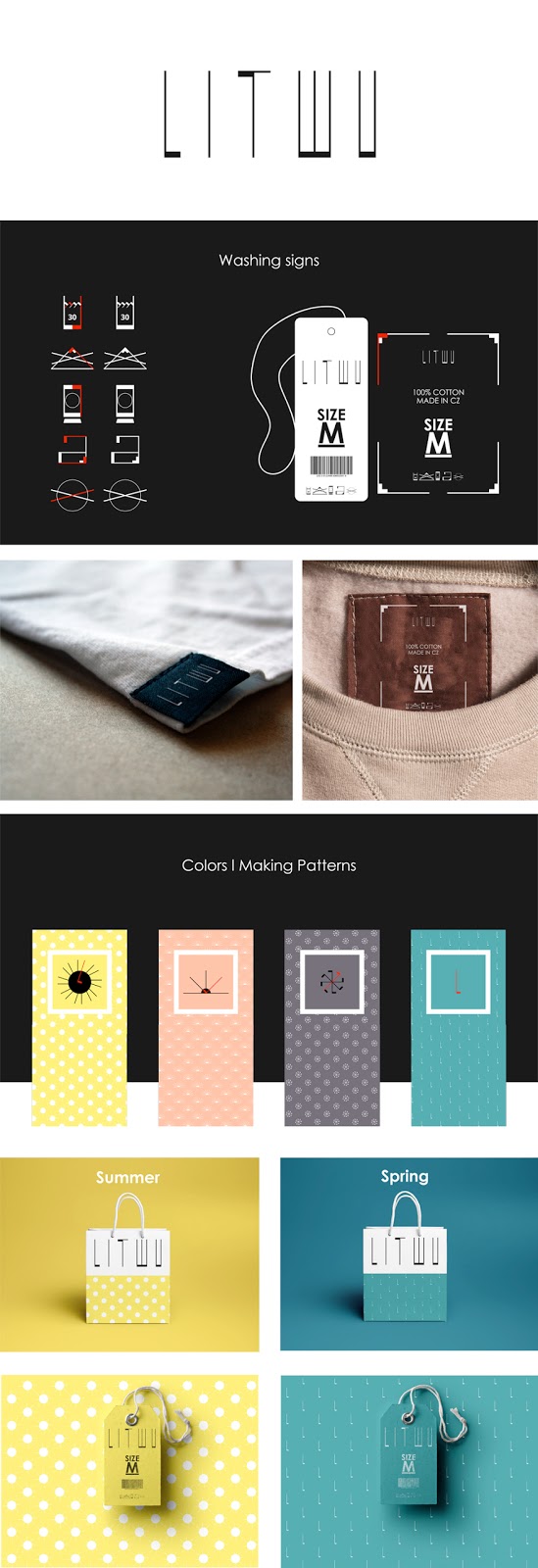
In his work Anton Bugaev created logo that visually reflects the thread, and thin versus thick parts of sewing. Based on the custom letters he constructed washing symbols as well as decorative patterns representing seasonal mood. Together it creates good visual consistency.
litwu - Anton Bugaev

Litwu by Anton Bugaev

Love is the way up approach

Some students created a solution that suits Litwu brand and its requirements conceptually. The visual treatment highlights typical attributes of Litwu rather than emphasising fashion industry itself. Their beauty lies in simplicity while standing away from being boring.

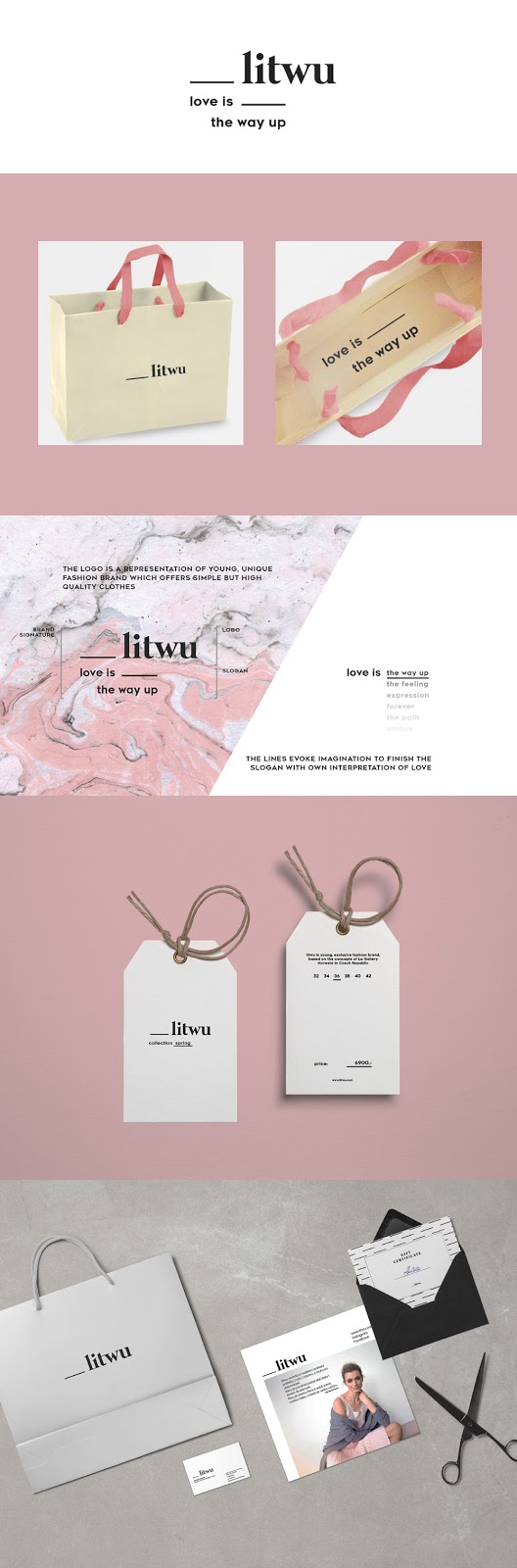
The concept by Maggie Jandova allows the self interpretation of love by leaving a space to be filled accordingly. Love is... the way up, the feeling, passion etc. It corresponds with the brand's focus on woman in her diverse everyday life situations.

litwu - Maggie Jandova

Litwu by Maggie Jandova


Almira Yausheva explored the line as a simple and functional symbol representing connections: woman and love, brand and customer, different collaborations between designers.
The shape shows life with ups and downs in it, but tend to always go up in the end.
litwu - Almira Yausheva
Litwu by Almira Yausheva


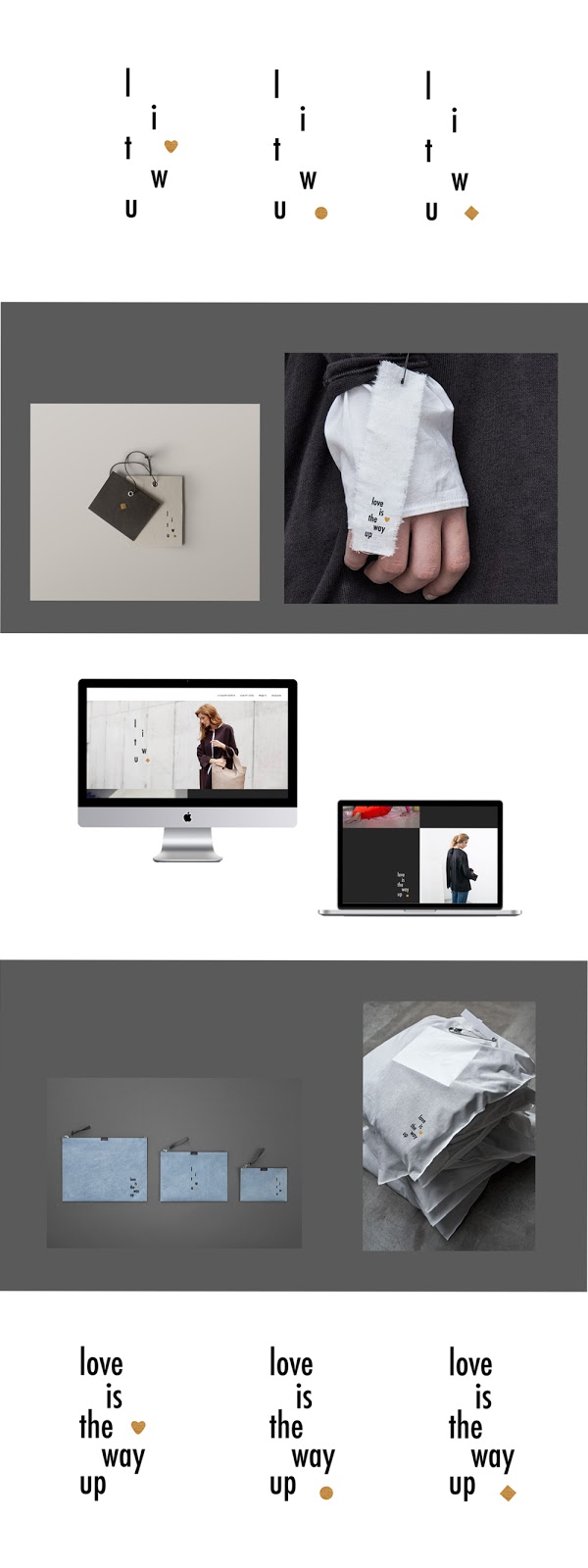
Since Litwu brand focuses on female fashion mainly, Iva Borisova built her concept around a vertical line representing female body. The additional playful shapes show diversity. They are however kept within a certain frame which points out that the company's high standards are about to remain stable.
litwu - Iva Borisova
Litwu by Iva Borisova

litwu - Iva Borisova
Litwu animation by Iva Borisova


Fashion in the air

As opposed to the three above listed examples the following ones show clearer connection to the fashion industry. They still represent Litwu company by considering and incorporating some of its key values into the design.

The visual solution of Aidana Dzhumagulova reflects the main paraphrase of Litwu in interpretation of the shape: the top part of the logo is open which means all the ways up are free. It also communicates the described path of a woman in its classical but contemporary atmosphere that is highlighted by the perfection for quality, lines and colour palette.

litwu - Aidana Dzhumagulova

Litwu by Aidana Dzhumagulova


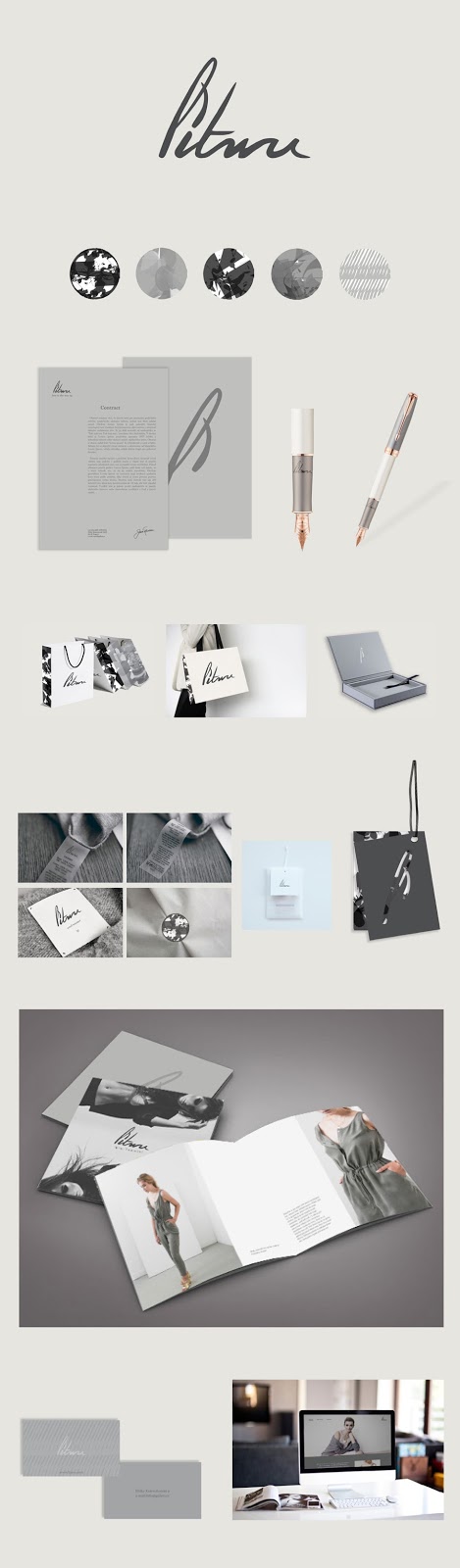
Ain Rahmanova worked with another element typical for fashion brand - a needle, designed in customised handwritten manner. The symbol is connected with Litwu by its minimalism, neatness and representation of individual approach - to the clothes design as well as to its customers.

litwu - Ain Rahmanova

Litwu by Ain Rahmanova


The last shown work is by Daniel Dreyer who created the logotype based on sewing stitches. Keeping the colour palette and whole visual language minimalistic fits with Litwu brand characteristics and requirements.
litwu - Daniel Dreyer

Litwu by Daniel Dreyer


In conclusion


Litwu brand is a real client the students worked with within this project. I believe the company received suitable solutions they can further work with and consider as their new corporate identity. Once the client's choice is made I'll be happy to announce the selection here.

14/10/2016

Did I make some mistake? Oh, that's great!

Book review


Nowadays we tend to focus on excellence and perfect results only. We are afraid of failure and we are afraid to make mistakes. Which in fact is very limiting. The work of Erik Kessels - www.kesselskramer.com - seems flawless. However in his new book Failed it! Kessels reveals more than 150 projects that are based on errors and imperfections. Purposeful as well as accidental ones. He, as a matter of fact celebrates the art of making mistakes.

This pocket guide about errors shows how to transform mistakes into ideas across broad spectrum of creative forms such as design, photography, architecture, or product design. Kessels encourages creative people to catch on these errors and take an advantage of them. He uses photographs of his own work but also some found projects and together with quotes and tips he explains the aim and results that can be achieved thanks to the mistakes. He emphasises that 

'failure is not fatal. Quite the opposite.'

Making mistakes during our creative process is actually helping us find new ways as well as increasing our creativity. It brings new possibilities of how to look at things. I would compare it to today's trend of lomography, and leaving the result partially or fully on a coincidence. This book will help you to open your eyes and untie your hands.

And as Erik Kessels adds: 'Amateurs tend not to be slavish about getting the picture 'right', they just want to get the picture. They never know what they might end up with, and they don't particularly care. Nor should you.'


This article was also published on Czechdesign.cz (in Czech language)


13/10/2016

What do you do when you get stuck?

'What do you do when you get stuck?' was the opening question I asked our Prague College BA Graphic Design students on the experimentation workshop. The aim of this 4-hours lesson was to teach the designers how to get back to their creative process through random experimentation, as well as to encourage them to consider purposeful experiments as one of their working habit.

When designing this workhop I thought about those freakout moments and panic attacks designers have time to time because of getting stuck. I desperately wanted to evoke this feeling in my students at the beginning of the workshop in order to simulate real life situation. So I collected common, apparently uninteresting objects from various materials such as shoelace, plastic sachet, blank creased paper, sponge, wire, string, piece of cloth, straws etc. Each student was given only one object to work with.

collecting common objects

I succeeded. The students were surprised and uncertain of how they can creatively elaborate the object they received. On several examples of work from other designers as well as my own I showed few techniques emphasising hand-made approach. I stressed to carefully observe the material of their object, make connections, look for similarities, search for metaphors, play with it. The students could use their object as a tool for creating something new, or as a part of their design. They were allowed to (well ok, asked to) go wild!

Based on their diverse experiments the students had to come up with some social issue (recycling, waste, public transportation, social responsibility...) and address it through a small campaign, regardless the media. Including accident in the creative process is one of the ways how to approach some design solutions which the students tested within our workshop. They have also learnt they don't have to go far for ideas and inspiration, and can get unstuck by just 'playing' with an ordinary object.

Even though the workshop was focused on process rather than final result most of the students managed to end up with an outcome capable of explaining the concept and their thinking. I always encourage students to incorporate experimentation (either accidental or purposeful) as part of their creation. Because the results are worth it! Just have a look.

some of the workshop results

Zofia Ziakova, Bike more. Object: wire

Ieva Ozola, Home alone. Object: post-its

Ieva Ozola, Home. Object: post-its

Dora Ivanova, Light. Object: paper tube

Dora Ivanova, Equality. Object: paper tube

David Holzmann. Object: garlic mesh bag

Charlene Fournier. Object: plastic cup

Julie Klimentova. Object: transparent paper

Jana Krchova, Fading memories. Object: natural fibre

Rebecca Widera. Object: skewers

Stella Maria Ebner. Object: creased paper

Stella Maria Ebner. Object: creased paper

Elisabeth Mess. Object: string

David Nguyen. Object: shoelace

Ebenezer Animah. Object: plastic bag

Hubert Gaca, Internet. Object: wire


Laura Sophie Engeser, Violence. Object: straws

Zoe Mitterhuber, Philippines. Object: pieces of paper

Bianca Neumair, Save the sea. Object:aluminium foil

Mohini Mukherjee. Object: plastic bottle